Karnak Temple & Luxor Temple – East Bank Half-Day Tour
Half-day guided walking tour of Karnak and Luxor Temples, hotel pickup in Luxor, entrance fees and a local Egyptologist included.
At a glance
- Departs
- Daily
The short answer
East Bank: Karnak Temple and Luxor Temple is a one-day guided excursion to two temple complexes in Luxor, operated by Discovery Tours Egypt.
- Cultural
- Archaeology & history
- Photography
Snapshot
Good to know
- Duration
- Half-day
- Travel style
- Private Guided Tour
- Accommodation
- N/A
- Operated by
- Discovery Tours Egypt
- Destinations
- Karnak Temple · Luxor Temple
- Includes
- Licensed Egyptologist guide · Karnak Temple entrance fee · Luxor Temple entrance fee · Hotel pickup and drop-off within Luxor city limits · Air-conditioned vehicle between sites · Bottled water · Local taxes and service charges
- Best for
- History enthusiasts · Architecture and archaeology travellers · First-time visitors to Luxor · Travellers seeking a guided half-day
- Guide languages
- Arabic · English · French · German · Italian · Spanish
Best time to go
The best months are October to April, when daytime temperatures in Luxor are generally more comfortable for walking and outdoor viewing. Midday heat can be intense from May to September, so earlier departure times are preferable. Crowds are usually lighter early in the morning and later in the afternoon. During Ramadan and major public holidays, opening hours and visitor flow can vary, so it is sensible to confirm timing in advance.
- Discovery Tours Egypt is a licensed Egyptian tour operator.
- The excursion includes a licensed Egyptologist guide.
- The guide is described as a Luxor-based Egyptologist.
- The booking includes entrance fees to Karnak Temple and Luxor Temple.
- The excursion includes bottled water and an air-conditioned vehicle between sites.
02Overview
A first look
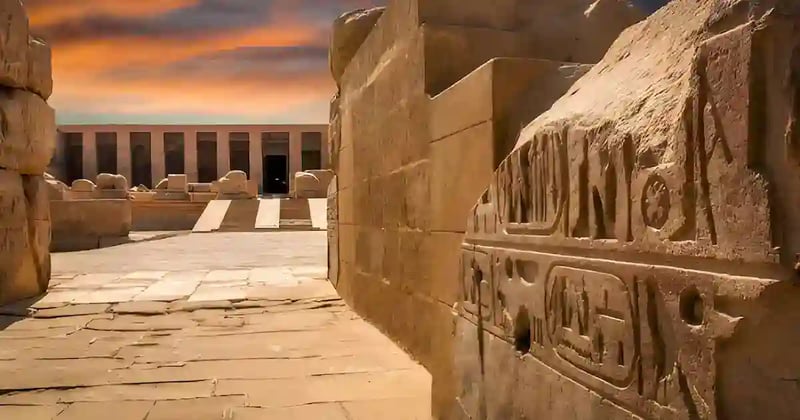
By 8 am the Nile mist often lifts from Luxor's riverfront. The long avenue of ram-headed sphinxes and Karnak's towering pylon appear as first light finds their carved reliefs.
Walk the Hypostyle Hall and the Avenue of Sphinxes while our Egyptologists point out cartouches, construction phases and the faint tool marks left by New Kingdom stonecutters. We arrange hotel pickup in an air-conditioned vehicle and a local, accredited Egyptologist to lead the walking tour, and we deliberately limit walking distances so you study inscriptions without the busiest crowds or the midday heat.
Background
The facts
Luxor’s East Bank contains two of Upper Egypt’s most important temple complexes: Karnak Temple and Luxor Temple. Karnak developed over many centuries, with major construction from the Middle Kingdom through the Ptolemaic period, and is best known for the Great Hypostyle Hall, a forest of 134 columns built mainly under Seti I and Ramesses II. Luxor Temple lies about 3 km to the south along the ancient processional route that once connected the two sanctuaries.
A typical visit begins at Karnak, where visitors walk through the precinct of Amun-Ra, the avenue of ram-headed sphinxes, pylons, obelisks, courts and sanctuaries. The site is large and spread out, so guided visits usually focus on key areas such as the first pylon, the open court, the Hypostyle Hall and selected relief-covered chambers. The temple complex is several kilometres from central Luxor, and movement between sites is usually done by air-conditioned vehicle rather than on foot.
Luxor Temple was also expanded during the New Kingdom, with prominent work by Amenhotep III and Ramesses II, and later additions in the Roman and Islamic periods. Its main features include the first courtyard, colonnades, the sanctuary area and the seated statue of Ramesses II. The temple is especially notable for its alignment with the ancient Avenue of Sphinxes, a ceremonial route that linked Luxor Temple with Karnak during major festivals.
For day visitors, the practical value of a timed East Bank excursion is that both temples can be visited in one outing without backtracking across the city. Entrance fees are standard inclusions unless otherwise noted, and a licensed Egyptologist can explain New Kingdom religion, royal titulary, relief scenes and construction phases while keeping the pace manageable in Luxor’s heat.
Named in this entry
Karnak Temple·Luxor Temple·The Great Hypostyle Hall·Avenue of Sphinxes·Nile·Luxor·Thebes·Seti I·Ramses II·Amenhotep III·Tutankhamun·Horemheb·Ptolemaic period
Suited to
Is this for you?
Yes, if
- This excursion suits first-time visitors to Luxor, history enthusiasts, and travellers aged roughly 12+ who want a focused introduction to New Kingdom temple architecture. It is also suitable for adults who prefer a moderate walking pace with frequent stops, rather than a long self-guided visit.
- It works well for couples, solo travellers and small families who want clear commentary on inscriptions, monuments and ritual spaces without navigating the sites independently.
Maybe not, if
- Choose a less walking-intensive visit if you need step-free access, as the temple grounds have uneven stone, steps and thresholds. It is also a poor fit for very young children who struggle with heat or standing for long periods.
What lingers
- 01Guided visit to Karnak Temple's Great Hypostyle Hall (134 columns) with our Egyptologist; entrance fees included.
- 02See Luxor Temple's Ramesses II statue and Avenue of Sphinxes; evening lighting available on request.
- 03Walk the colonnades and chapels built by Amenhotep III and Ramesses II; limited shade at midday.
- 04Short central Luxor hotel pickup; transfers in an air-conditioned private car with licensed driver.
- 05We avoid big coach groups; your visit averages 2–2.5 hours at Karnak and 45–60 minutes at Luxor Temple.
Honest assessment
The honest pluses and minuses, as our own team sees them after running this trip.
Highlights
- A licensed Egyptologist explains New Kingdom architecture and religious symbolism.
- See the Great Hypostyle Hall and sphinx avenue at Karnak.
- Visit Luxor Temple's colonnades and the seated statue of Ramses II.
- The route allows time for questions and close study.
- An air-conditioned vehicle connects the two temple sites.
Things to Consider
- Uneven ancient stone, steps and thresholds make walking demanding.
- Shade is limited in parts of both temple complexes.
- Heat can make late-morning visits uncomfortable from May to September.
- Strollers are difficult to use inside the temple grounds.
Worth knowing
How this compares
Most rushed cruise-ship shore calls allow limited time at each temple. We plan time for visitors to examine inscriptions and ask their Egyptologist questions. The excursion focuses on the two East Bank complexes rather than adding other Luxor sites.
The fine print
What's included – and what is left out
Included
- Explore with a licensed Egyptologist as your guide
- Hotel pickup and drop-off within Luxor city limits or at the agreed meeting point
- Admission to Karnak Temple and Luxor Temple
- Transfer between the temples in an air-conditioned vehicle
- Bottled water
- Local taxes and service charges
Not included
- Tips for your Egyptologist and driver
- Optional extras, including sound-and-light shows, private photography permits or museum visits
- Meals, unless specifically stated in your booking
- Fees for premium experiences not listed in the inclusions
Field notes
From our Egyptologists
- 01
Allow extra time at the Great Hypostyle Hall to look up at the columns and carved ceiling details.
- 02
Bring a hat and water for exposed walking areas, particularly during warmer months.
- 03
Wear shoes with a firm sole for uneven ancient paving and long stretches on foot.
- 04
Ask your Egyptologist to point out the changes in construction between Seti I and Ramses II.
Tailor it
Make it yours
Ask whether a private option or a different meeting point can be arranged when you enquire. Sound-and-light shows, museum visits and photography permits are optional extras, while meals are not included unless stated in your booking.
Your own specialist deals with each request before you book.
Where it fits
This East Bank visit fits naturally into a Luxor itinerary alongside a separate excursion to the Valley of the Kings and other West Bank sites. It can also provide historical context before or after time in Aswan.
Before you go
What to pack & wear
Children & families
Minimum recommended age is 4 due to walking distances, uneven paving and steps at both Karnak and Luxor temples. Strollers are not practical inside the temple precincts; a lightweight folding stroller may be used between hotel and vehicle but will need to be folded on paved entrances. We do not provide high chairs; request a child seat at least 48 hours before departure and we will attempt to source one, subject to availability and local safety regulations. Each child has their own seat, so transport, the guide and meals cost the same as for an adult whatever their age. Site entry is free for under-6s and full price from 6.
The morning of
Meeting point & timing
- Where
- Hotel pickup — Luxor hotels (within city limits)Map
These fares are a guide, as prices and departure move through the year. Do ask us and we will confirm the fare for the days you have in mind.
While you're here
Worth pairing
- Luxor Museum25 min walk
- Mummification Museum10 min walk
- Valley of the KingsRight here
Why book this with us
Three reasons, stated plainly
01
Time to study Karnak's inscriptions without a rushed stop
02
Visit both East Bank temples with a Luxor Egyptologist
03
Air-conditioned transfer between Karnak and Luxor Temple
·In summary
Karnak Temple is about 2.5 km north of Luxor Temple, making the two East Bank complexes straightforward to visit in one excursion. Their buildings span periods from the Middle Kingdom to Roman rule, with major construction at Karnak under Seti I and Ramses II.
Asked & answered
Frequent questions
01How long does the visit to Karnak Temple and Luxor Temple take?
A standard visit to Karnak Temple and Luxor Temple typically lasts about three to four hours. We usually run this as a private guided visit with one of our Luxor-based Egyptologists rather than a large coach group. Expect slow walking, stops for inscriptions and the Hypostyle Hall at Karnak; the route is flexible depending on your pace. Midday can be hot and crowded; many clients prefer an early-morning start to avoid both heat and coach arrivals.02Are entrance fees and the Egyptologist included?
Standard entrance fees for Karnak Temple and Luxor Temple are included unless we state otherwise. A private Egyptologist from our team accompanies most private visits and their fee is normally included in the tour price. We are a licensed Egyptian tour operator and handle local permits, guides, and entrance arrangements. Extras such as special-access permits, private audio guides, or sound-and-light tickets are not included unless specified.03Is this visit suitable for people with limited mobility?
Karnak Temple and Luxor Temple have uneven ancient stone pavements and steps; parts are not wheelchair-friendly. Many routes include cobbles, shallow steps and unshaded stretches; transfers by vehicle can reduce walking but cannot remove all uneven ground. We can pace the visit, provide closer drop-offs and a private car, and advise exactly which areas are accessible on request. If full wheelchair access is essential, tell us at enquiry so we can propose alternatives or additional support.04What should I wear and bring for the visit?
Wear comfortable, modest clothing and sensible shoes for uneven surfaces; bring sun protection and a refillable water bottle. Temples expect modest dress (shoulders and knees covered); a wide-brimmed hat, high-SPF sunscreen and sunglasses are essential in summer. Small backpacks are manageable, but security checks can be restrictive; leave large luggage at your hotel. If you plan an early-morning start, a light layer is useful for cooler winter mornings.05Can I photograph at Karnak and Luxor temples, and are tripods allowed?
Photography with handheld cameras and smartphones is normally permitted at Karnak Temple and Luxor Temple. Tripods, drones and professional filming usually require prior permission and may be restricted at specific monuments. We can arrange filming permits in advance, but permits often incur extra fees and several days' lead time. Visitors should respect on-site signage and the guidance of our Egyptologist regarding flash, tripod use and sensitive reliefs.06Can I combine the East Bank temples with West Bank sites on the same day?
You can combine East Bank temples with West Bank sites, but this requires an early start and a longer day. Crossing to the West Bank adds travel time, extra entrance fees for tombs and more walking over uneven ground, so the day becomes full rather than relaxed. Unlike quick cruise-ship shore calls that often only include East Bank highlights, a combined private programme lets you see both banks properly if you allow the full day. Tell us which West Bank sites you prefer and we will propose a feasible itinerary.
If plans change
Cancellation and refunds
What you receive back if you cancel depends on how far ahead of your holiday you let us know and the kind of holiday you book. See our current cancellation and refund terms
Last updated 5 August 2026Product ID: EXC-LUX-454376
You Might Also Like
 Luxor
LuxorDeir el-Medina and Tombs of the Nobles Half-Day Tour
Deir el-Medina preserves the remains of the village where workers lived while building and decorating royal tombs in ancient Thebes. At the nearby Tombs of the Nobles, decorated burial places reflect the status and lives of officials and other members of elite society. The contrast between a workers’ community and noble tomb art gives this Luxor West Bank visit its focus. Unlike a broad West Bank itinerary, this half-day excursion concentrates on these two archaeological sites. A private Egyptologist guide provides context as you visit, with a private vehicle for pickup and drop-off at your Luxor hotel or Nile cruise.
From £39
 Luxor
LuxorDendera & Abydos Temples day trip from Luxor
A private day from Luxor visiting Dendera and Abydos by road, led by one of our Egyptologists. Dendera lies about 60 km north of Luxor (roughly 1 hour); Abydos is about 165 km further north (roughly 2.5–3 hours' drive). We operate this as a private-car day rather than a large coach, allowing flexible stops en route and proper time at Seti I’s reliefs and the Dendera Hathor ceiling. Expect a long day with an early pickup and several hours on the road; shade is limited at both sites around midday. Standard site entrance fees are included; special permissions or premium-access areas are extra. We are a licensed Egyptian tour operator.
From £88
LuxorEsna and Edfu Temples Day Trip from Luxor
Visit the Temple of Esna and the Temple of Edfu on a private excursion from Luxor, with a licensed Egyptologist guide. Esna’s temple is dedicated to Khnum, the creator god, and its hypostyle hall features carved columns and an astronomical ceiling. Edfu is dedicated to Horus and is among Egypt’s best-preserved ancient temples, with inscriptions and reliefs across its walls. We arrange private transport with pickup and drop-off at your Luxor hotel or Nile cruise, plus lunch at a local restaurant. Unlike a group coach outing, this visit is privately arranged, allowing your guide to focus on both temples with your group.
From £80