Tomb of Ay – Valley of the Kings (Luxor West Bank)
Admission to Pharaoh Ay’s decorated burial chamber on Luxor’s West Bank, with painted scenes from the late Eighteenth Dynasty.
At a glance
- Departs
- Daily
The short answer
Tomb of Ay Entry Ticket is an entry ticket granting admission to Pharaoh Ay’s tomb on Luxor’s West Bank, booked and arranged by Discovery Tours Egypt.
- Archaeology & history
- Cultural
Snapshot
Good to know
- Time to allow
- Self-paced
- Travel style
- Self-Guided Entry
- Arranged by
- Arranged by Discovery Tours Egypt
- Destinations
- Tomb of Ay
- Includes
- Single admission to the Tomb of Ay · Access to the decorated burial chamber and chapel, subject to site access
- Best for
- Ancient Egyptian history enthusiasts · Travellers exploring Luxor West Bank · Visitors seeking a quieter tomb
Best time to go
October to April is generally more comfortable, with daytime temperatures often around 20–30°C; May to September can bring temperatures above 35°C, so visit early to avoid the strongest heat. Visitor numbers and opening patterns can change during Ramadan and public holidays, so check current hours before setting out.
- Discovery Tours Egypt is a licensed Egyptian tour operator.
- The ticket provides single admission to the Tomb of Ay.
- The ticket is delivered as a PDF attachment after booking confirmation.
- Transport and on-site commentary are excluded.
02Overview
A first look
The Tomb of Ay is a late 18th Dynasty royal burial in the Valley of the Kings on Luxor's West Bank. Its painted walls show funerary rites and scenes linking Ay with Tutankhamun.
Background
The facts
The Tomb of Ay is a rock-cut royal tomb on the West Bank of Luxor, within the Theban necropolis, the burial landscape used by New Kingdom rulers and elites. An entry ticket grants admission to the tomb’s decorated burial chamber and painted surfaces.
Pharaoh Ay ruled at the end of the Eighteenth Dynasty, after the reign of Tutankhamun, in the late 14th century BCE. The tomb’s painted scenes include royal rituals and funerary iconography associated with burial beliefs of that period.
The monument is smaller than the principal tombs in the Valley of the Kings, and its interior is compact, so visits are generally brief. It forms part of a wider West Bank archaeological area rather than standing alone.
Opening hours and access conditions can change with the season or conservation work. Check current information before visiting. Photography rules vary, so confirm the policy at the entrance. The ticket is a single admission; transport and on-site commentary are not included.
Named in this entry
Tomb of Ay·Pharaoh Ay·Luxor·Theban necropolis·Luxor’s West Bank·Eighteenth Dynasty·Tutankhamun·The Valley of the Kings·New Kingdom·Thebes
Suited to
Is this for you?
Yes, if
- This entry ticket suits adults and older children, roughly 10 and over, interested in New Kingdom history and painted tomb decoration. It works well for independent visitors who want a short West Bank stop rather than a long museum visit.
Maybe not, if
- Choose a different site if you need step-free access or space for a pushchair, as the approach may include uneven ground or steps and the chamber is compact. It is also a limited choice if you want extensive interpretation included with admission.
What lingers
- 01See the Tomb of Ay on Luxor West Bank, part of the Ancient Theban Necropolis UNESCO site.
- 02Entrance ticket included; premium tombs (Tutankhamun, Seti I) and gratuities are excluded unless requested.
- 03Expect narrow passages, low ceilings and several uneven steps – typical physical demands on the West Bank tomb circuit.
- 04Short visit suitable for a Luxor half-day; we can combine with neighbouring tombs on the West Bank.
- 05Unlike cruise-operator schedules, we offer morning slots before the midday heat and peak coach arrivals.
Worth knowing
How this compares
Many visitors to Luxor’s West Bank focus on the larger tombs in the Valley of the Kings. This is a standalone admission to the smaller Tomb of Ay, with no transport or on-site commentary included.
The fine print
What's included – and what is left out
Included
- Single-admission entry ticket to the Tomb of Ay
Not included
- On-site professional commentary or narration; arrange this separately if required
- Travel to and from the site
- Food and personal spending
- Photography rules and any applicable permit fees
- Some venues ask for a printed ticket. Review the PDF emailed to you and print it if unsure
Field notes
From our Egyptologists
- 01
Check current opening hours before setting out, as seasonal schedules and conservation work can affect access.
- 02
Arrive early if you want to avoid the busier periods at West Bank archaeological sites.
- 03
Print the emailed PDF if you are unsure whether the entrance accepts tickets shown on a mobile screen.
- 04
Ask at the entrance about photography rules and any permit fees before taking photographs.
Tailor it
Make it yours
This is a single-admission ticket, not a guided visit; on-site commentary is not included and must be arranged separately if available. You can combine the stop with nearby West Bank sites, but transport and any additional admissions are separate.
Your own specialist deals with each request before you book.
Where it fits
The Tomb of Ay entry ticket fits into a Luxor West Bank visit alongside the Valley of the Kings and Medinet Habu. Check opening hours before setting out, as site access varies seasonally.
While you're here
Worth pairing
- The Valley of the KingsRight here
- Medinet HabuRight here
- Deir el-MedinaRight here
Why book this with us
Three reasons, stated plainly
01
Ticket arranged through a licensed Egyptian tour operator
02
Single admission for a focused visit to Ay’s tomb
03
Straightforward PDF delivery after booking confirmation
·In summary
Pharaoh Ay’s rock-cut tomb belongs to the late 14th century BCE, at the end of Egypt’s Eighteenth Dynasty. Its compact burial chamber contains painted royal rituals and funerary scenes, and the monument is smaller than the principal tombs in the Valley of the Kings.
Asked & answered
Frequent questions
01Where can you find the Tomb of Ay?
The Tomb of Ay is on Luxor's West Bank, within the Valley of the Kings area. It sits among the West Bank burial landscape and is commonly visited on the same excursion as nearby tombs. You'll approach on foot from the Valley access road; there is limited shade around the tomb entrance.02How long does it take to visit the Tomb of Ay?
We recommend 20–30 minutes to view the Tomb of Ay. The interior is compact with low ceilings and painted reliefs, so most visitors spend 15–30 minutes. Our Egyptologists usually schedule it alongside other West Bank sites to avoid repeated short transfers.03Is photography allowed inside the Tomb of Ay?
Photography inside many Luxor tombs is restricted and rules are applied for conservation. Your guide will confirm the site policy on the day; if permitted, expect low light and narrow spaces and a prohibition on flash. Mobile-phone video may also be limited by the inspectorate.04Is the Tomb of Ay wheelchair accessible?
The Tomb of Ay is not wheelchair accessible: it has steep, uneven descent and narrow, low‑ceiling passages. Visitors need to negotiate ancient stone steps and tight corridors with limited lighting. If you have reduced mobility we can propose an alternative West Bank programme with fewer stairs–please tell us at booking.05What should I wear to visit the Tomb of Ay?
Wear sturdy shoes and dress modestly for the Tomb of Ay and other West Bank sites. Lightweight trousers or long shorts and covered shoulders suit tomb interiors and nearby temples. Also bring a sun hat and water for outside areas, and expect limited shade at midday.06Can I combine a visit to the Tomb of Ay with other West Bank sites?
Yes – the Tomb of Ay is routinely combined with the Valley of the Kings, Hatshepsut and Deir el‑Medina. We typically include Ay as a short stop rather than the main focus, unlike major tombs such as KV62 (Tutankhamun). Combining sites avoids multiple transfers and fits a half‑day West Bank itinerary.
Last updated 22 October 2026Product ID: TKT-LUX-084060
You Might Also Like
 Luxor
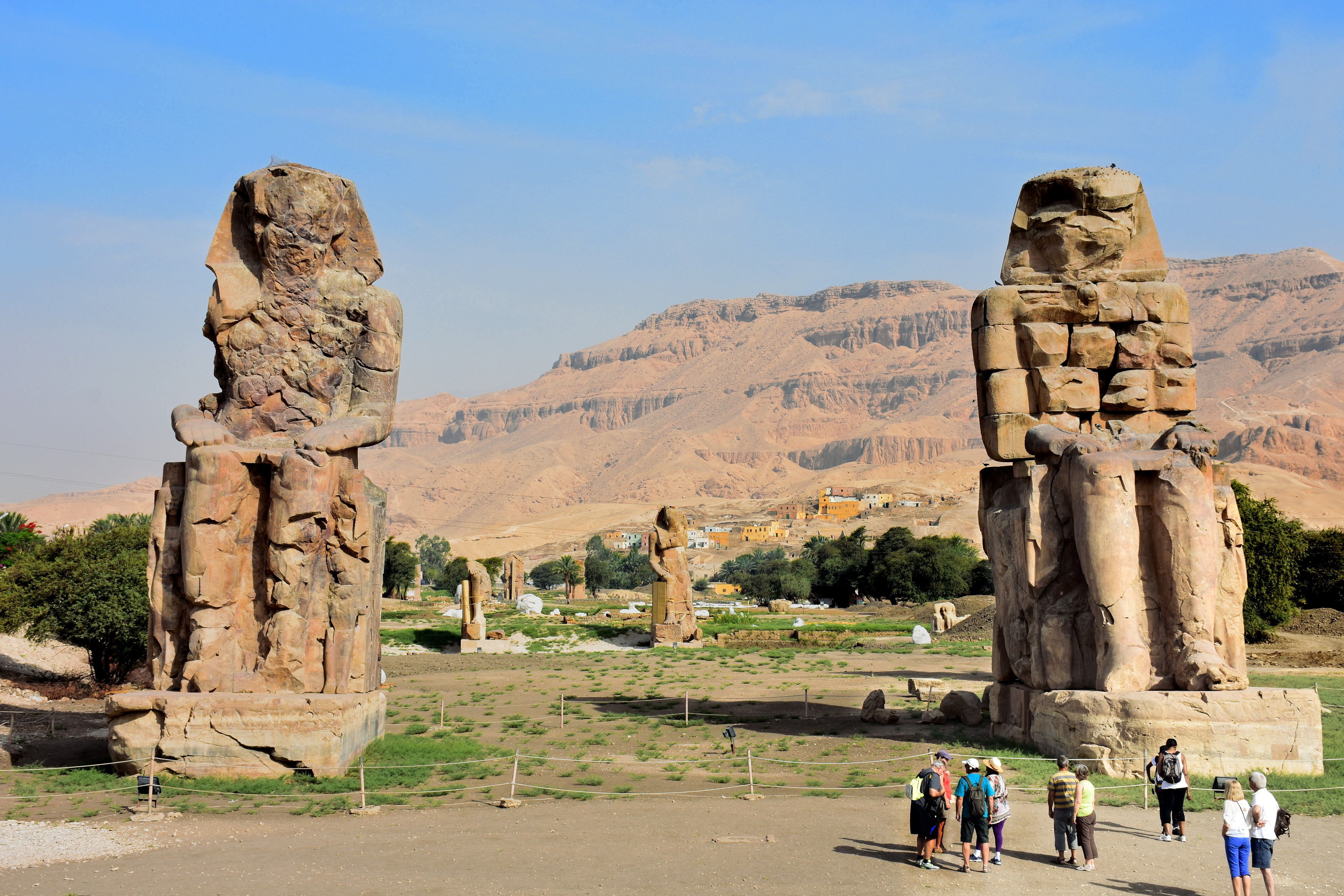
LuxorColossi of Memnon (Luxor West Bank)
The Colossi of Memnon are two seated sandstone statues of Amenhotep III on Luxor’s West Bank, each about 18 metres high. They stand on the ruined platform of Amenhotep III’s mortuary temple; only the colossi remain in situ. Roman visitors reported one statue emitted a sound at dawn; that phenomenon ceased after ancient repairs. We treat the Colossi as a short, interpretive stop (20–30 minutes) rather than a full-day visit – we do not schedule it as the day's main attraction. Expect uneven gravel, limited shade at midday, and easy photography opportunities from the roadside. We are a licensed Egyptian tour operator and can add a private Egyptologist or transfer.
From £2
 Luxor
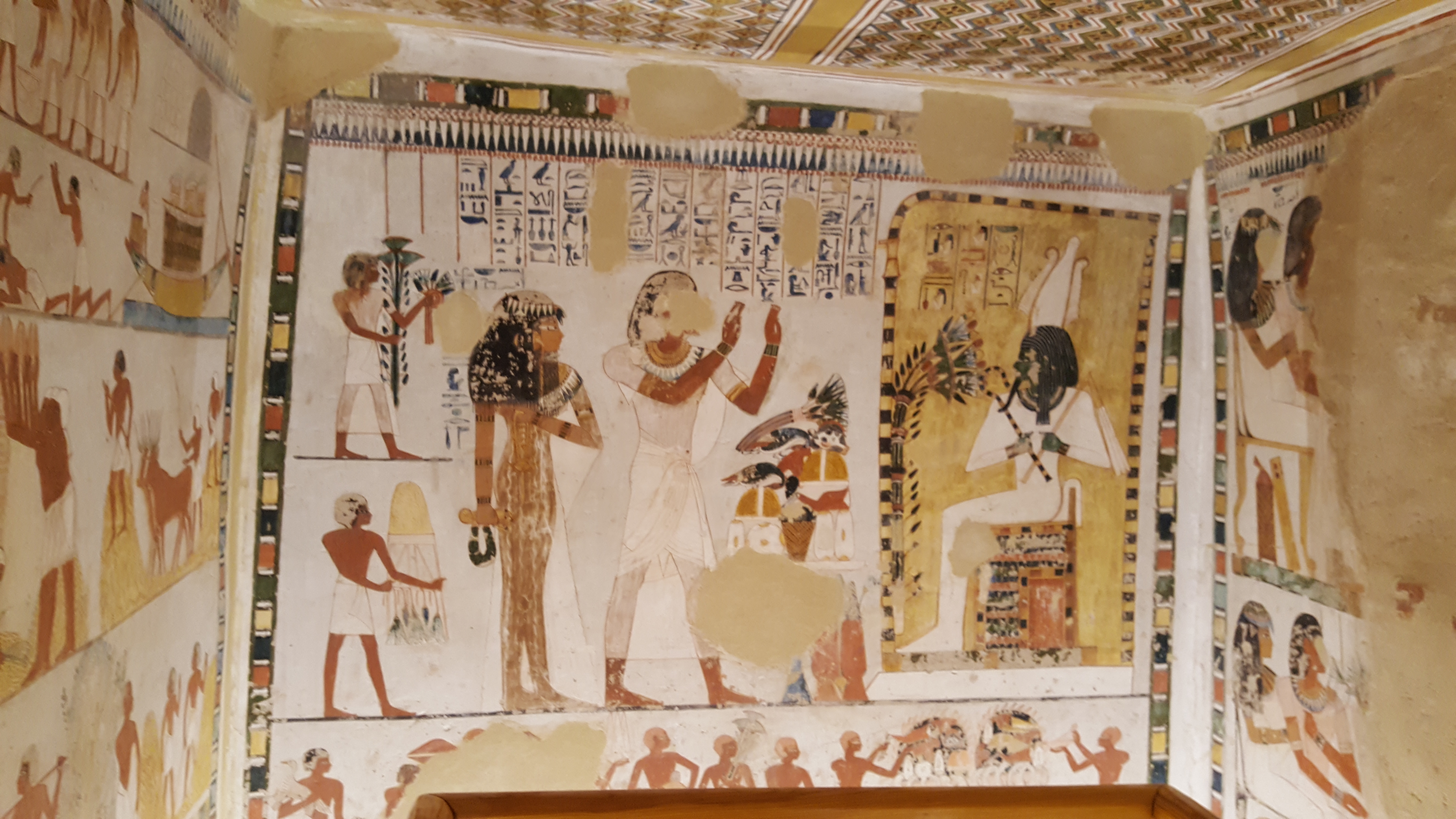
LuxorTomb of Menna (TT69) – Sheikh Abd el-Qurna, Luxor
The Tomb of Menna (TT69) on Luxor's West Bank contains well‑preserved 18th‑Dynasty wall paintings showing agriculture and estate administration. Unlike royal tombs in the Valley of the Kings, Menna concentrates on daily‑life scenes and tax records rather than funerary texts. The chamber is compact with low ceilings and limited natural light; narrow passages and uneven ancient stone mean it is not suitable for standard wheelchair access. We recommend an early‑morning visit to reduce heat and group congestion. As a licensed Egyptian tour operator, we can add a private transfer or one of our Egyptologists if you prefer a guided, uncrowded visit.
From £4
 Luxor
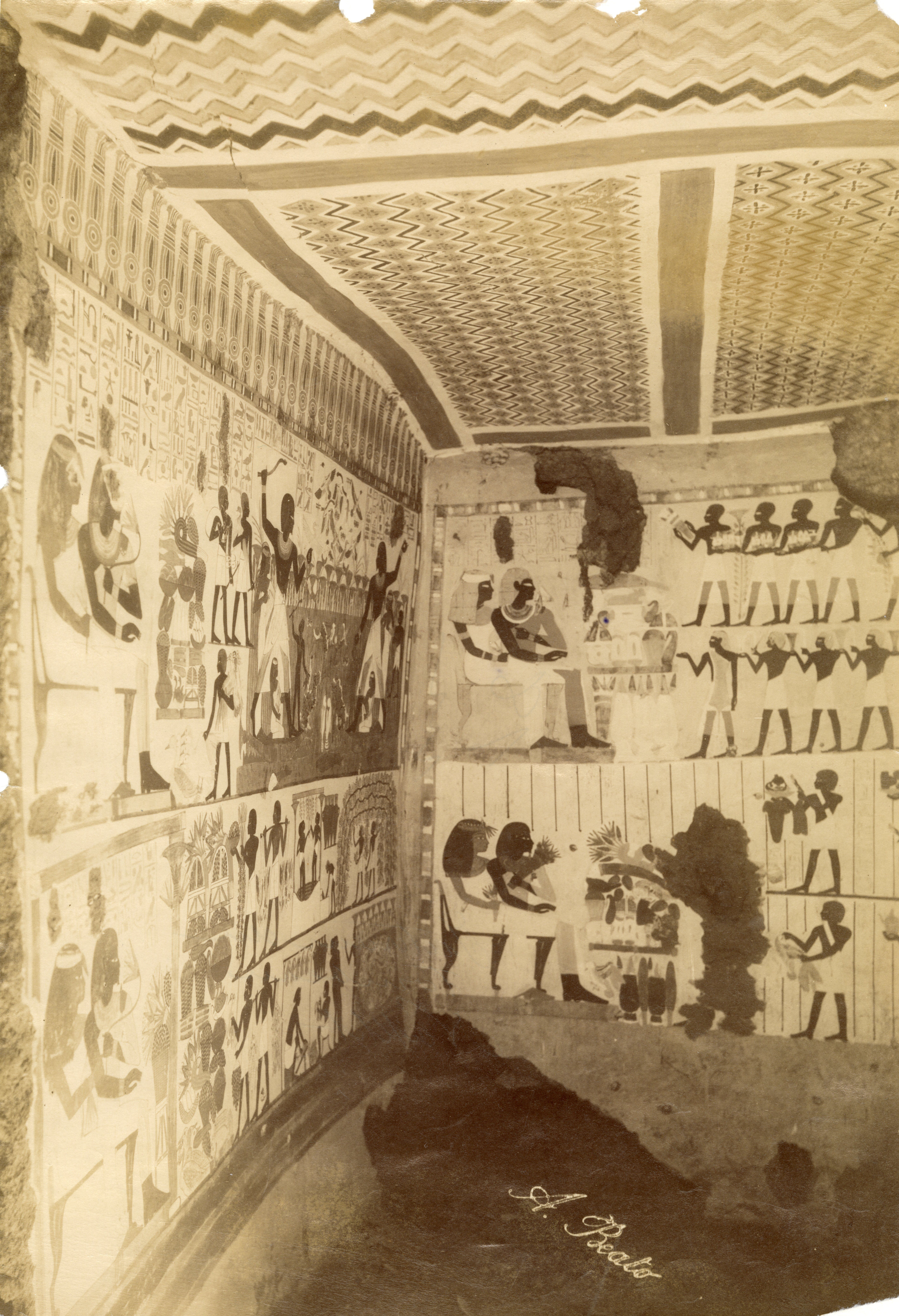
LuxorTomb of Nakht – Sheikh Abd el-Qurna, Luxor
The Tomb of Nakht at Sheikh Abd el-Qurna is an 18th‑Dynasty private tomb decorated with agricultural, banqueting and musical scenes. As a licensed Egyptian tour operator, we arrange private half‑hour visits led by our Egyptologist and include the standard West Bank entrance ticket in the price. We do not run mass‑bus rotations here; visits are capped so you can study the paintings. Unlike Valley of the Kings tombs, Nakht's chapel emphasises daily life rather than royal funerary texts. Note: the chapel is small, has limited shade and sensitive pigments, so early morning or late‑afternoon slots work best.
From £4