Amoura Dahabiya Nile Cruise
Traditional sail between Luxor and Aswan with private cabins, Full Board meals and optional Egyptologist-led visits to Kom Ombo and Edfu
At a glance
- Length
- 4 days · 3 nights
- Embarks
- Mon, Fri
- Board
- Full Board
- Class
- 5-star
Per cabin · Cabins are sold individually — book just your own cabin, sharing the boat with a handful of other guests.
The short answer
Amoura Dahabiya is a four-day sail-powered Nile cruise visiting sites between Luxor and Aswan, arranged through Discovery Tours Egypt.
·In summary
The four-day Amoura Dahabiya cruise follows the Nile between Luxor and Aswan, with visits including Karnak Temple, Edfu and Philae. Its shallow draught can permit moorings at riverbank sites inaccessible to larger motor cruisers, while sailing depends on wind and navigation conditions.
- Luxury
- Cultural
- Adventure
- Archaeology & history
- Seniors·
- Couples·
- Groups
Snapshot
Good to know
- Accommodation
- Dahabiya cabin accommodation
- Destinations
- Esna · Edfu · Kom Ombo · Aswan
- Includes
- Cabin accommodation aboard Amoura Dahabiya · Full Board meals from embarkation-day lunch to disembarkation-day breakfast · Captain and crew on board · Access to communal areas and the sun deck · Nile sailing with stops at sites accessible to dahabiyas
- Best for
- Couples · Slow-travel enthusiasts · Sailing enthusiasts · Travellers seeking quieter Nile stops
- Guide languages
- English · French · German · Italian · Others
- Discovery Tours Egypt is a licensed Egyptian tour operator that selects, books and arranges the cruise.
- The listed programme names visits at Karnak Temple, Luxor Temple, the Valley of the Kings, Edfu, Kom Ombo and Philae.
- The cruise includes an onboard captain and crew.
What lingers
- 01Sail-powered dahabiya travel on the Nile, at a gentler pace than larger motor cruisers
- 02Stops at dahabiya-accessible sites including El Kab, Gebel Silsila and the Hagar Salsala quarry
- 03Full Board meals from lunch on embarkation day through breakfast on disembarkation day
- 04Sun deck and public areas on board
- 05Captain and crew on board
02Overview
A first look
Early morning on the Nile, the dahabiya slips between light and shadow; you step ashore onto warm stone and smell tamarisk and faint diesel as Luxor stirs. The boat's low decks make boarding gradual, nets hang from nearby skiffs, and coffee vendors push brazier carts along the quay while the east bank skyline widens in the window.
You travel at a measured pace, sailing when the wind permits and spending long daylight hours ashore for short walks, photography and village visits. Unlike larger dahabiyas, we prioritise daytime cruising and frequent shore time. We arrange the crew, meals and local transfers, and our Egyptologists brief you each morning on the day's route and sites.
Background
The facts
Amoura Dahabiya is a four-day, sail-powered Nile cruise between Luxor and Aswan. A dahabiya is a smaller sailing vessel than a standard motor cruiser; its shallow draught can allow it to moor at riverbank sites that larger boats cannot reach. Sailing depends on wind and navigation conditions.
The route links Luxor and Aswan, with excursions at Karnak Temple, Luxor Temple, the Valley of the Kings, Edfu, Kom Ombo and Philae. The itinerary also includes El Kab, Gebel Silsila and the Hagar Salsala quarry.
Karnak Temple and Luxor Temple stand on Luxor’s east bank. The Valley of the Kings is a royal burial ground used mainly during the New Kingdom, from the 16th to the 11th centuries BCE. Edfu’s Temple of Horus and Kom Ombo’s double temple, dedicated to Sobek and Haroeris, lie along the Nile route. Philae is associated with the cult of Isis; its temple complex was relocated to preserve it after the construction of the Aswan High Dam.
Sailing takes place on the Nile, not at sea, and the vessel moves when wind and navigation conditions allow. The cruise provides full board from lunch on embarkation day through breakfast on disembarkation day. Drinks (including water) are typically extra. Opening hours and seasonal site schedules vary.
Named in this entry
Luxor·Aswan·Nile River·Karnak Temple·Luxor Temple·The Valley of the Kings·Edfu·The Temple of Horus·Kom Ombo·Philae·El Kab·Gebel Silsila·Hagar Salsala quarry·Isis
Suited to
Is this for you?
Yes, if
- Amoura Dahabiya suits couples, solo travellers and small groups who value quiet sailing, river views and time ashore at sites such as El Kab and Gebel Silsila. It is a good match for adults and older children interested in temples and archaeology who are comfortable with a slower pace.
Maybe not, if
- Choose a larger motor cruiser if you prefer a more scheduled pace or want to avoid sailing that depends on wind conditions. The shore visits may not suit travellers who need step-free access or have difficulty walking on uneven ground.
Honest assessment
The honest pluses and minuses, as our own team sees them after running this trip.
Highlights
- Lateen-sail travel offers a quieter rhythm than larger motor cruisers.
- Shallow-draft stops can include El Kab and Gebel Silsila.
- Sun deck and shaded lounge bar provide space to relax.
Things to Consider
- Sailing pace depends on wind conditions.
- Temple visits can involve steps and uneven ground.
- Stroller access is limited at temples and riverbank landings.
- Drinks (including water) are typically extra.
Worth knowing
How this compares
Larger motor cruisers follow established routes and may not reach shallow riverbank landing points. Amoura Dahabiya is sail-powered and can call at smaller sites, including El Kab and Gebel Silsila; wind conditions affect sailing times.
The route
Esna and Aswan
- EdfuThe Temple of Horus
- Kom OmboThe Temple of Sobek
Choose your direction
- Esna → Aswan4 nightsupstream, against the current
- Aswan → Esna3 nightsdownstream, with the current
The route
Where this ship sails
The stretch of river this vessel works, and what the sailing is like end to end.
On board
Detailed itinerary
Based on embarkation from Esna and disembarkation in Aswan.
- 1
- 2
- 3
- 4
The fine print
What's included – and what is left out
Included
- Stay aboard Amoura Dahabiya
- Full Board meals, from lunch on embarkation day to breakfast on disembarkation day
- Captain and crew on board
- Use of the public areas and sun deck
- Sailing on the Nile, with stops at sites accessible to dahabiyas
Not included
- Drinks, including water, are not included, even with meals
- Gratuities for the crew and Egyptologists, unless requested
- Private or domestic flights, airport transfers and visa charges
- Entrance fees for optional premium visits, such as pyramid interiors or numbered tombs, unless stated as included
- Travel insurance and personal outgoings
Field notes
From our Egyptologists
- 01
Keep plans flexible on sailing days: wind and navigation conditions can change the time spent moving along the river.
- 02
Ask which landing points are planned at El Kab and Gebel Silsila, as shallow-draught access is a key difference from larger cruisers.
- 03
Check the current opening schedule for each archaeological site before setting out; timings can vary by season.
- 04
Budget separately for drinks (including water) and for crew and Egyptologist gratuities.
Tailor it
Make it yours
The vessel sails weekly in both directions between Luxor and Aswan, so ask us which departure direction suits your plans. The listed programme includes Karnak, Luxor Temple, Edfu, Kom Ombo, Philae and the Valley of the Kings; ask us whether any changes or additional visits can be arranged.
Your own specialist deals with each request before you book.
Where it fits
Amoura Dahabiya fits a Nile itinerary linking Luxor and Aswan, with time in Cairo before or after the cruise. Its calls at El Kab and Gebel Silsila add riverbank sites that larger motor cruisers may not reach.
Accessibility
Who can join this
We are a licensed Egyptian tour operator and our on-the-ground team will meet you, but the Amoura Dahabiya has physical constraints that limit accessibility for some travellers. The vessel has steps between the gangway, public areas and most cabins; there is no lift on board. Shore access uses small gangplanks and often requires stepping onto uneven quays or sandy riverbank paths. Visits to temples and tombs include cobbled surfaces, stone steps, narrow passageways and low ceilings. Portable folding wheelchairs may be usable for short stretches on board, but independent wheelchair access at many archaeological sites is not possible. If you use a wheelchair or have reduced mobility, contact us before booking so we can assess needs and arrange assistance where feasible; we cannot guarantee full access at every site.
– Responsible travel
How we travel here
The Amoura Dahabiya carries fewer guests than larger Nile steamers, which lowers per-trip fuel and energy demand compared with larger vessels. The boat uses standard marine diesel for propulsion and onboard power, with routine maintenance carried out in Luxor and Aswan to reduce fuel inefficiency. Crew and shore staff are recruited locally from Luxor and Aswan communities; fresh provisions such as fruit, vegetables and bread are sourced from local markets when practicable. Waste is segregated on board and single-use plastics are minimised. We are a licensed Egyptian tour operator and we work with the vessel owner to encourage fuel-efficient sailing practices and to support local suppliers, while recognising that river cruising produces measurable emissions compared with land-only travel.
Licensed Egyptologist guides
State-licensed, and people we have worked with for years
Fair wages on the ground
Drivers + guides paid above market
Site preservation
We follow the Ministry of Tourism and Antiquities' site rules: marked paths, no touching reliefs
Local teams, real help
Our own offices in Cairo, Luxor, Aswan, Hurghada, Marsa Alam and Sharm El Sheikh
Before you go
What to pack & wear
What to bring
- Valid passport and any required entry documents
- Sunscreen SPF30+ and lip protection
- Wide-brimmed hat and sunglasses
- Comfortable closed-toe walking shoes with good grip
- Lightweight daypack and reusable water bottle
- Adapter for Egyptian mains voltage 220V, type C/F
- Personal medication and a small first-aid kit
What to wear
- Lightweight, breathable clothing for hot daytime temperatures
- A warm layer for cooler early mornings and evenings on deck
- Covered shoulders and knees for temple visits
- Comfortable closed-toe shoes for archaeological sites
- A scarf or shirt for additional sun and dust protection
Children & families
Children are accepted aboard the Amoura Dahabiya, but the vessel is not childproofed and small children require continuous supervision. We recommend a minimum age of six years for comfortable participation because of ladder steps, gangplanks and uneven surfaces during shore visits. Child fares vary by cabin class and are priced per person sharing; a single supplement usually applies to solo travellers. Pushchairs and large strollers are impractical on board, a lightweight folding stroller may be managed but must be stored during shore visits. Please contact us with children's ages and any special requirements so we can advise and make practical arrangements.
Prices by sailing
Prices are per person in GBP, from 2 people sharing a double cabin. Each price covers the full sailing, the guided sightseeing programme along the route, and your arrival and departure transfers between the vessel and the local airport or railway station.
| Sailing | October – Aprilcurrent season | May – September | Peak dates18 Dec – 6 Jan, 21 Mar – 4 Apr, 9 Apr – 23 Apr |
|---|---|---|---|
| 3 nights · Aswan → Esnaembarks Fridays | October – April: from £943single cabin £1,321 | May – September: from £910single cabin £1,321 | Peak dates: from £1,009single cabin £1,419 |
| 4 nights · Esna → Aswanembarks Mondays | October – April: from £1,162single cabin £1,666 | May – September: from £1,118single cabin £1,666 | Peak dates: from £1,250single cabin £1,797 |
Peak dates: 18 Dec – 6 Jan, 21 Mar – 4 Apr, 9 Apr – 23 Apr. Choose your sailing and date in the booking panel for the exact price.
Cabin allocation
- Nile vessels do not have interconnecting cabins.
- Book early and we will ask the vessel to place your party together — usually adjacent, or directly opposite.
- Cabin numbers are confirmed by the vessel at check-in.
These fares are a guide, as prices and cabins move through the year. Do ask us and we will confirm the fare for the days you have in mind.
Add Cairo before or after your cruise
The ship stays between Luxor and Aswan. The Pyramids, and most flights back to the UK, are in Cairo. These short extensions link the two.
If plans change
Cancellation and refunds
What you receive back if you cancel depends on how far ahead of your holiday you let us know and the kind of holiday you book. See our current cancellation and refund terms
Location
On the map
While you're here
Worth pairing
- Karnak TempleRight here
- Luxor TempleRight here
- The Valley of the KingsRight here
- Temple of Horus at EdfuRight here
- Gebel SilsilaRight here
- El KabRight here
Why book this with us
Three reasons, stated plainly
01
Choose a quieter pace with time ashore
Asked & answered
Frequent questions
01How long is the Amoura Dahabiya cruise between Luxor and Aswan?
The standard Amoura Dahabiya sail runs for four nights between Luxor and Aswan. We schedule a measured pace with daylight cruising and frequent shore stops. Exact itinerary can vary by wind and river level; we confirm the day-by-day plan at booking and again the evening before departure so you know which temples and villages you will visit.02What time and where is the pick-up in Luxor for embarkation?
Embarkation normally begins at the Nile quay near central Luxor at around 11:00. We provide a precise pick-up time and meeting point the day before embarkation. Transfers from hotels on Luxor's east bank are usually a short drive; if you are staying on the west bank or at a Nile-side hotel with restricted quay access, we will advise an adjusted meeting point.03Which meals and drinks are included on board the Amoura Dahabiya?
Full Board is included: lunch on embarkation day through breakfast on disembarkation day, with chef-prepared meals served on board. Drinks, including water, are not included; they may be available for purchase on some cruises. We can accommodate most dietary requirements if informed at least 14 days before departure.04What is expressly excluded from the cruise price?
Entrance fees for premium tombs such as Tutankhamun and Seti I, gratuities for crew and Egyptologists, and optional activities (hot-air balloon, felucca trip) are not included unless we state otherwise. Local departure taxes and special permit fees, if required, are also excluded. We list the full exclusions in the booking confirmation.05Is the Amoura Dahabiya suitable for travellers with reduced mobility?
The dahabiya has low decks and boarding involves steps and a gangplank; uneven stone at shore landings is common. Some cabins are reached by narrow stairs. If you use a wheelchair, have significant mobility limits or need assistance, tell us in advance so we can advise whether this cruise is appropriate and arrange additional help where possible.06Can children travel on the dahabiya and are family cabins available?
Children are welcome but cabin space is limited and not all cabins accept extra berths. The cruise is quieter and slower-paced, which suits families who value relaxed shore time. For families under-12 we recommend booking a private cabin and advising ages at booking so we can arrange appropriate lifejackets, seating and shore-visit pacing.07What should I bring and wear for shore visits and deck time?
Bring sun protection first: high-SPF sunscreen, a wide-brimmed hat, sunglasses and a reusable water bottle. For temples wear modest clothing that covers shoulders and knees; comfortable walking shoes are essential for uneven stone. Pack a light, long-sleeved layer for mornings and evenings on deck and a small daypack for camera gear and water.08Are photography and tripods allowed at the temples and on board?
Photography for personal use is generally permitted at Kom Ombo, Edfu and most riverside sites, but flash or tripods may be restricted inside some temple interiors. Rules vary by site and can change; our Egyptologists advise on specific restrictions each morning and will help with the best times and angles for photography.09Which time of year is ideal for sailing the Nile aboard a dahabiya?
November to March offers the most comfortable temperatures and clearer skies for cruising and shore visits. Spring (March–May) can be warmer and windy; summer is hot and may restrict midday walking. We plan itineraries to avoid the hottest hours and suggest early starts or later afternoon visits during summer.10Will an Egyptologist accompany shore visits on the Amoura Dahabiya?
An Egyptologist leads or briefs the shore visits on most sailings; our Egyptologists provide morning briefings on the day’s route and sites. On some departures a local guide licensed for specific sites will join; we state the guiding arrangements at booking so you know whether your visit is led by one of our Egyptologists or a local specialist.
Last updated 8 March 2025Product ID: CRU-NIL-709784
You Might Also Like
 Nile
Nile3 Nights
Bens Dahabiya Nile Cruise
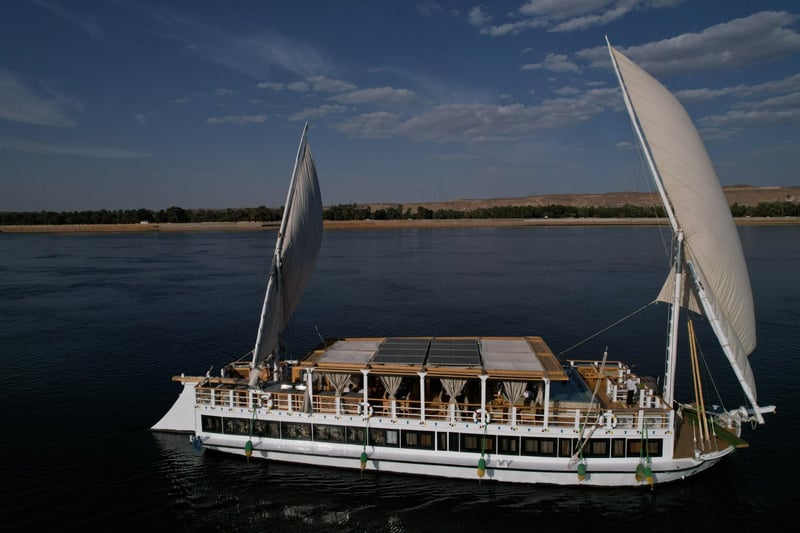
Bens Dahabiya is a sail-powered dahabiya cruise on the River Nile in Egypt. Dahabiyas offer a quieter, slower-paced alternative to larger Nile cruise ships, though sailing times can vary with wind conditions. Full-board meals are provided from lunch on the embarkation day through breakfast on the disembarkation day. Standard sightseeing and site entrance fees are included only where listed in the confirmed cruise programme. Some visits involve walking over uneven ground. Discovery Tours Egypt, a licensed Egyptian tour operator, arranges the cruise; the vessel is operated by its cruise provider. Unlike larger cruise ships, a dahabiya offers a smaller-scale sailing experience, but the exact route and sightseeing stops depend on the confirmed booking.
From £984
 Nile
Nile3 Nights
Three Pyramids Dahabiya
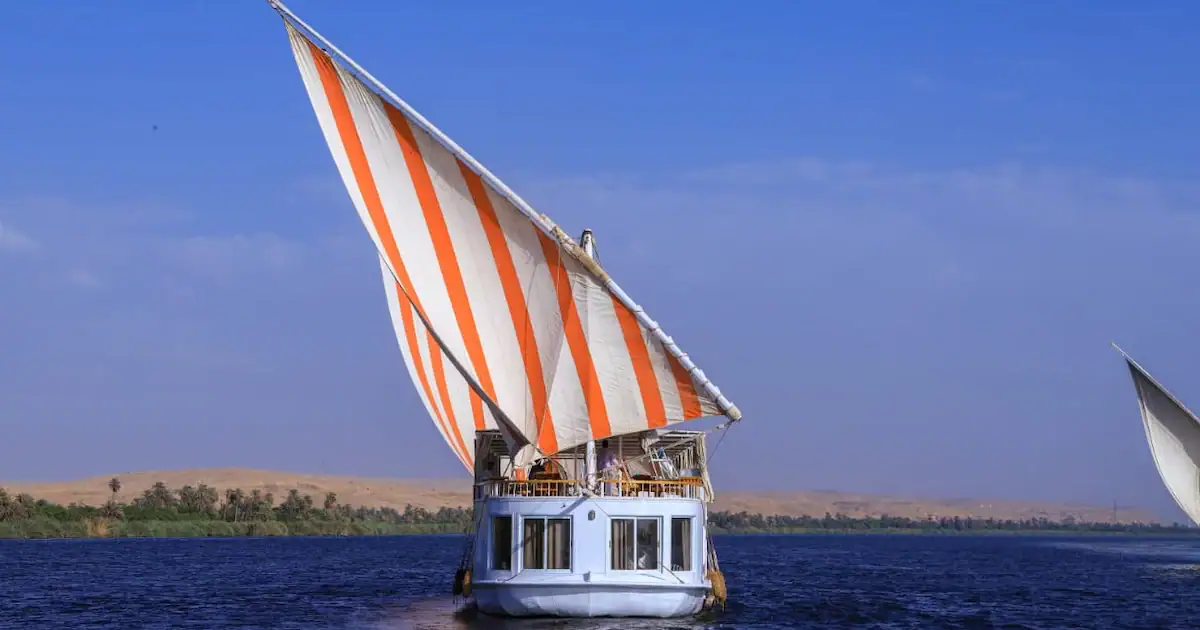
Three Pyramids Dahabiya cruises from Luxor to Aswan, calling at Karnak, Luxor, Edfu, Kom Ombo and Philae. The pace is measured, with mornings ashore for temple visits and afternoons spent sailing past palm groves and Nile islands. You pass through the historic Esna Lock, visit a riverside village and explore the Temple of Horus at Edfu and the twin temples at Kom Ombo. We favour small-group dahabiya sailings with eight to 12 guests rather than larger motor-ship cruises, so visits are quieter and more flexible. Our Egyptologists lead the sightseeing and we are a licensed Egyptian tour operator, available to answer planning questions and arrange your transfers and onward travel.
From £984
 Luxor
Luxor3 Nights
Akhnaton Dahabiya Nile Cruise
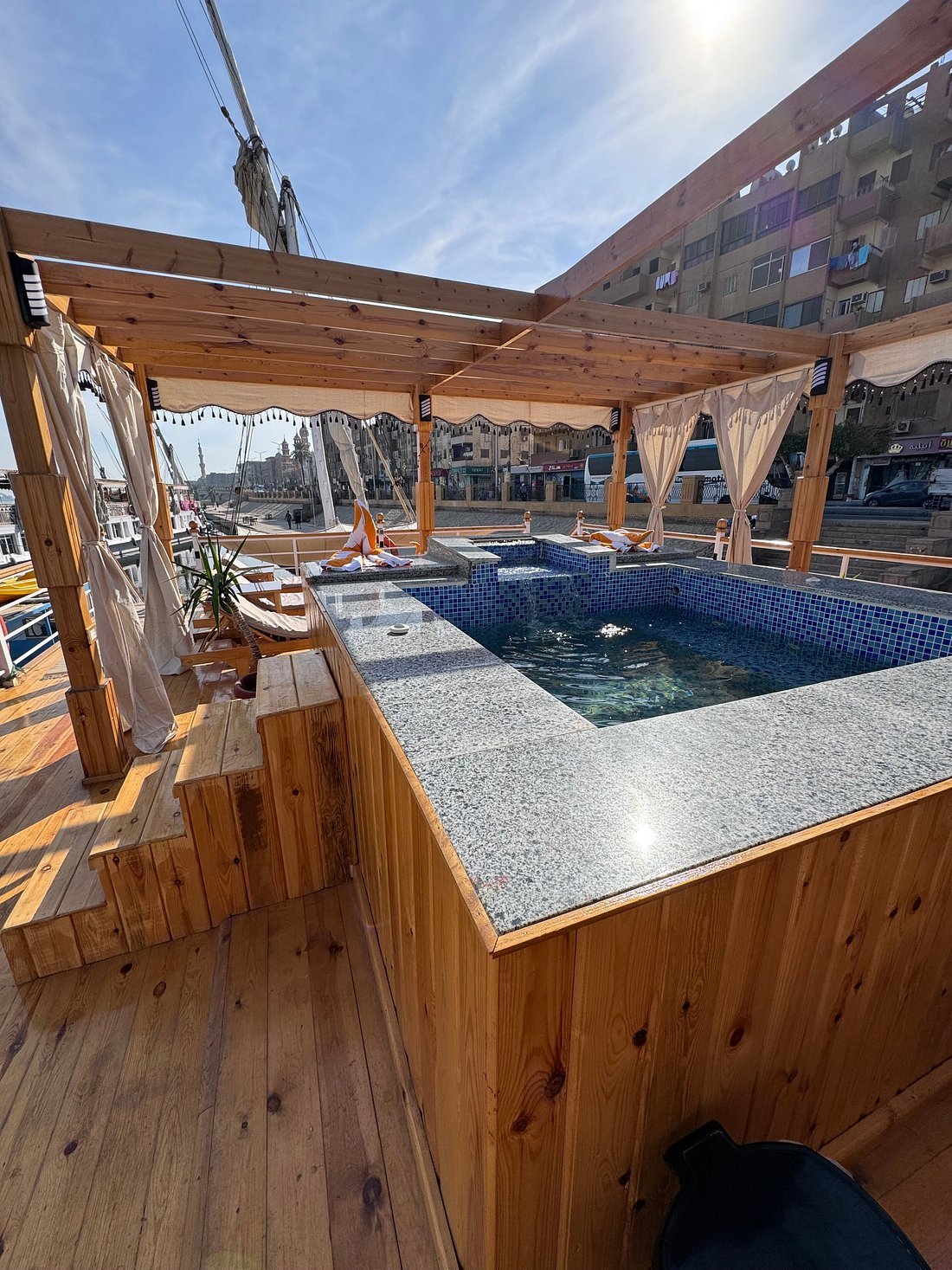
The Akhnaton Dahabiya is a traditional sail-powered craft offering seven days on the Nile between Luxor and Aswan. We operate it as a small, privately chartered dahabiya; we don't run group-bus tours. Typical calls include Luxor West Bank, Karnak Temple, Esna lock, Edfu Temple and Kom Ombo. Unlike packaged motor cruises, a dahabiya sails more slowly and anchors at quieter riverside moorings overnight. Trade-offs: cabins are generally smaller than on motor cruise ships and sailing days depend on wind; there is limited shade on the sun deck at midday. We can arrange a private Egyptologist and bespoke shore excursions for each group.
From £959