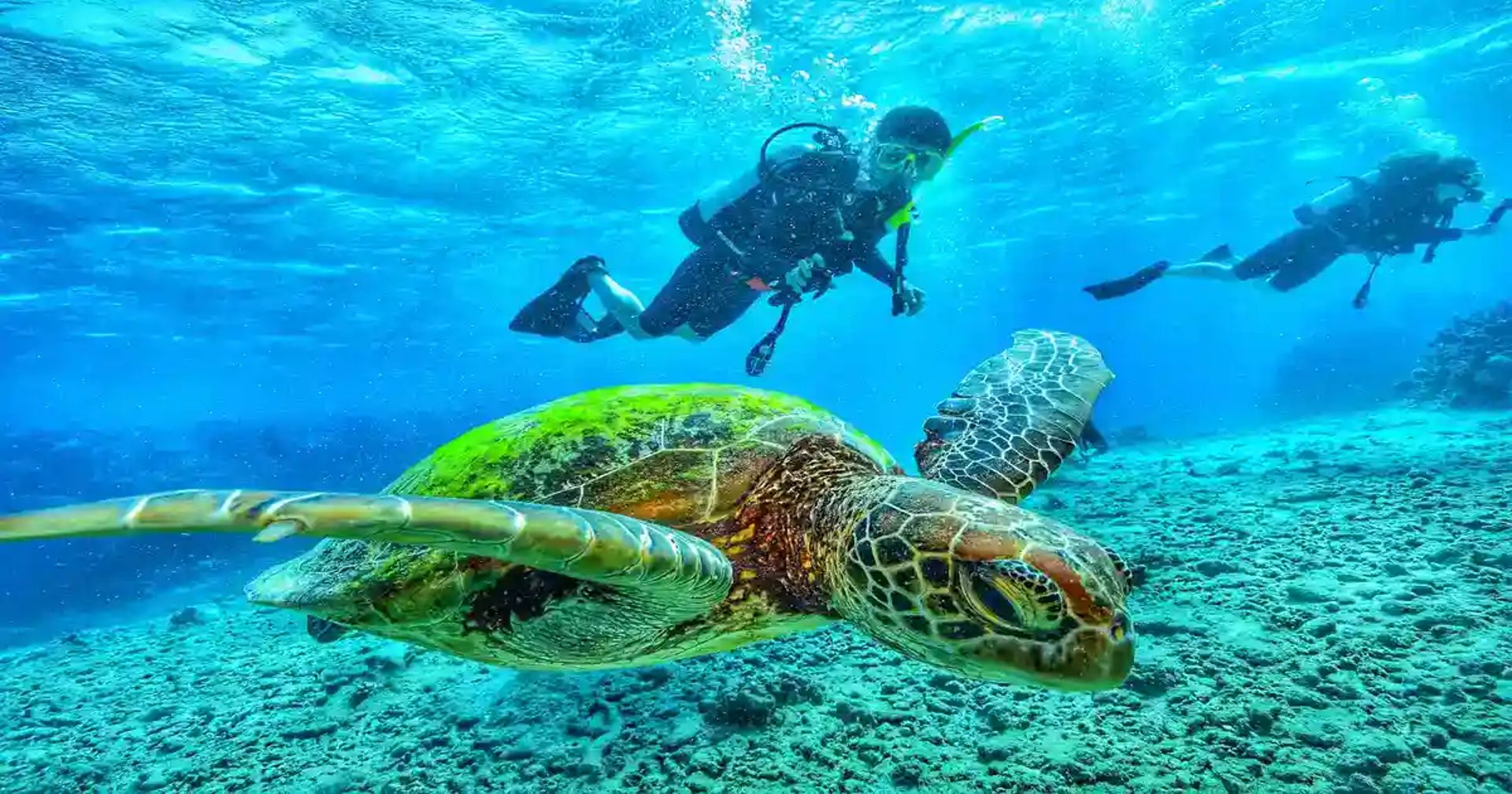
An intro dive is the easiest way to try scuba, and you do not need to be a strong swimmer or a diver. You stay shallow, you are supervised closely, and the briefing covers everything you need. Most people find the first minute strange, because breathing underwater feels wrong, and the second minute surprisingly calm.
The day is eight hours long and includes two guided dives, a lunch break and time to look around the boat. It is a shared trip for up to 20 guests, and the price covers the instructors, the full scuba equipment and the marine park fees. Insurance is not included.
How the day runs
You are collected from your hotel at 08:00 and taken to the dive centre. At 08:30 there is paperwork, including a medical self-declaration, and your equipment is fitted. The boat leaves at 09:15 and reaches the first reef about an hour later. At 10:15 the instructor gives a briefing on breathing, equalising and hand signals, and the first dive follows at 10:45.
- First dive: to about 6 metres, with one instructor for at most two guests.
- Lunch on board at 12:30, with soft drinks and water.
- Second dive at 13:45 on another reef, to no more than 12 metres.
- Return to the marina at 15:30, then a transfer to your hotel.
The briefing and the dive itself
Equalising means gently clearing your ears as you go down, the way you do on a descending plane. The instructor shows you how and watches you do it. Hand signals cover the basics: okay, up, down and a problem. Underwater, you will be near the instructor, who guides you by the hand if needed. You are not asked to swim far, and you spend most of the dive looking at fish and coral.
Who can and cannot do it
The minimum age is 10. The medical self-declaration asks about asthma, heart conditions, ear and sinus problems, epilepsy and pregnancy, and a yes to any of them may mean you cannot dive. Answer honestly, because the form is there to protect you. If you cannot dive, you can still come along and snorkel between dives, and your companions will tell you what they saw.
What you will feel and see
Expect three sensations. First, the weight of the equipment, which fades once you are in the water. Second, a pressure in your ears as you go down, which you clear by equalising. Third, the sound of your own breathing, loud and slow. At 6 metres the light is still bright, and the reef can be close: coral heads, small reef fish and sometimes larger fish passing by.
Most of the dive is spent hovering or moving slowly beside the instructor, and you are not expected to steer. The second dive is usually easier, because you know what to expect, and it goes a little deeper, to no more than 12 metres. Beginners usually relax after the first few minutes and start looking around.
Intro dive or full course?
An intro dive is not a qualification. It lets you try scuba under supervision, with an instructor beside you, and it does not certify you to dive on your own. If you enjoy it, you can take a certification course on a later holiday or elsewhere. For this trip you need nothing but the medical form, swimwear and a willingness to follow instructions.
Before the day, prepare simply. Sleep well, eat a normal breakfast and drink water, but avoid alcohol the night before. Take any regular medication as usual, and mention it on the medical form. Tell the instructor if you have a cold or blocked sinuses on the morning, because congestion makes equalising hard and the instructor may advise you to snorkel instead.
Mind the extras. The trip includes equipment, instruction, lunch and marine park fees, but not underwater photos, towels or dive insurance, and gratuities are extra. If you want photographs of your dive, ask the dive team on the day what is possible. Check your holiday insurance too, because some policies exclude diving.
Flying after a dive
Diving adds nitrogen to your body, and flying too soon can cause decompression sickness. The usual advice for recreational divers is to wait about 18 to 24 hours before a flight. For this reason, do the dive day early in your holiday, not in the last day or two. If you have a flight home soon, ask our team before you book.
Book online up to 48 hours before the date, or send a request inside that window. Cancellation is free three or more days ahead, and the price depends on the date and the group. Open the trip page for the current price.
Plan with us
What is a first scuba dive in Hurghada really like?
What happens on an intro dive day in Hurghada: paperwork, briefing, two shallow guided dives, lunch on board, minimum age, and flying after diving.